Cold Plunge Hygiene & Maintenance Schedule: The Complete Operator's Guide
Cold Plunge Hygiene & Maintenance Schedule: The Complete Operator's Guide
Cold plunges are booming, but a plunge that isn't cleaned and sanitized correctly can turn from a wellness tool into a health risk fast. Whether you own a home unit or manage plunges for a gym, spa, or wellness studio, this guide answers the questions people actually ask about cold plunge hygiene and maintenance schedules, in plain language, so you can keep your water clean, your equipment running, and your users safe.
How often should you clean a cold plunge?
For shared or high-use cold plunges, test and adjust water chemistry daily and do a full clean weekly. For single-household home units used by one or two people, testing 2-3 times a week and a full clean every one to two weeks is usually enough. The right frequency always depends on how many people use the plunge and how often.
- Daily: Visual check for debris, skim the surface, test sanitizer and pH if in frequent use.
- Weekly: Full water test, filter rinse, wipe down of the shell and rim, sanitizer top-up.
- Bi-weekly to monthly: Deep filter clean or replacement check, inspection of seals and pump.
- Quarterly: Full water change and tank scrub for most home units.
- Annually: Full system service, chiller inspection, and plumbing check.
What is the best way to sanitize a cold plunge?
Most cold plunges use one of three sanitizing methods: chlorine, bromine, or a hydrogen peroxide/ozone system. Chlorine and bromine are the most effective at killing bacteria but need consistent monitoring. Hydrogen peroxide and ozone systems are gentler on skin and popular for home use, but they need more frequent water testing since they break down faster.
Whichever sanitizer you choose, keep it within its recommended range at all times. Low sanitizer levels are the number one cause of bacterial growth in cold plunges, and cold water actually slows down how sanitizers work, so plunges often need slightly higher sanitizer levels than a warm hot tub to stay effective.
What should the pH level be in a cold plunge?
Keep pH between 7.2 and 7.8, with 7.4 to 7.6 as the ideal range. If pH drifts too low, the water becomes corrosive and irritating to skin and eyes. If it drifts too high, your sanitizer becomes far less effective even if the level looks correct on a test strip. Test pH every time you test sanitizer, since the two are directly linked.
How do you know if your cold plunge water is dirty or unsafe?
Common warning signs include:
- Cloudy or hazy water, even after filtering
- A musty, sulfur-like, or strong chemical smell
- Slippery or slimy feel on the tub walls or floor
- Skin irritation, itching, or redness after use
- Visible film on the water's surface
If you see any of these signs, stop use, test the water immediately, and shock the water or perform a full drain and refill if levels are far out of range.
How often should you change the water in a cold plunge?
For home cold plunges with a filtration and sanitation system, a full drain and refill every 1 to 3 months is typical, depending on usage frequency and how well the water chemistry is maintained. Units without active filtration or chemical treatment should be drained and refilled every few days to once a week, since stagnant water without sanitizer becomes unsafe quickly.
How do you clean and maintain a cold plunge filter?
Rinse cartridge filters weekly with a hose, and do a deeper soak in filter cleaning solution every 4 to 6 weeks to remove oils and buildup a rinse alone won't clear. Replace cartridge filters every 6 to 12 months depending on use. For units with reusable mesh or sock filters, rinse after every use if the plunge sees daily traffic.
Do you need to shock a cold plunge?
Yes. Shocking oxidizes built-up contaminants like body oils, sweat, and organic waste that regular sanitizer levels don't fully break down. Shock your cold plunge weekly for shared or commercial use, and every 1 to 2 weeks for home use, or immediately after heavy use, cloudy water, or an odor.
What routine maintenance keeps a cold plunge chiller running well?
Beyond water chemistry, the chiller and pump need their own attention:
- Clean or replace the chiller's air filter every 1 to 3 months to keep it cooling efficiently
- Check refrigerant lines and listen for unusual noises during routine use
- Inspect the pump and plumbing for leaks monthly
- Keep the unit's surrounding area ventilated and free of dust buildup
- Schedule a professional inspection once a year to catch wear before it becomes a breakdown
A simple cold plunge maintenance schedule
Use this as a starting template and adjust based on how many people use your plunge:
- Every use: Skim debris, wipe down surfaces users touch.
- Daily (high-use): Test and adjust sanitizer and pH.
- Weekly: Full water test, filter rinse, shock treatment, wipe down shell and cover.
- Monthly: Deep filter clean, pump and plumbing inspection, chiller filter check.
- Quarterly: Full drain, tank scrub, and refill.
- Annually: Full professional service of the chiller and system components.
Get help keeping your cold plunge or hot tub in top condition
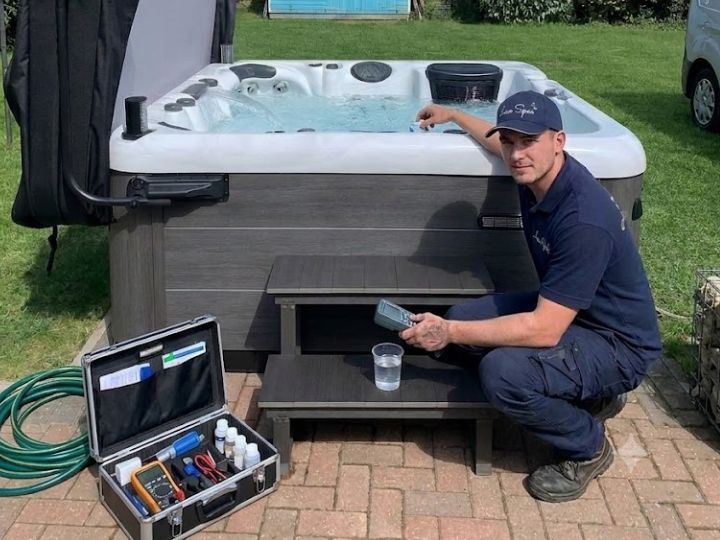
At Luso Spas, we sell and service hot tubs and cold plunges, and we know how much a consistent maintenance routine matters for both safety and equipment life. If you'd rather leave the testing, sanitizing, and servicing to specialists, our repair and maintenance team covers routine visits and emergency callouts so your plunge stays clean, balanced, and ready whenever you need it.